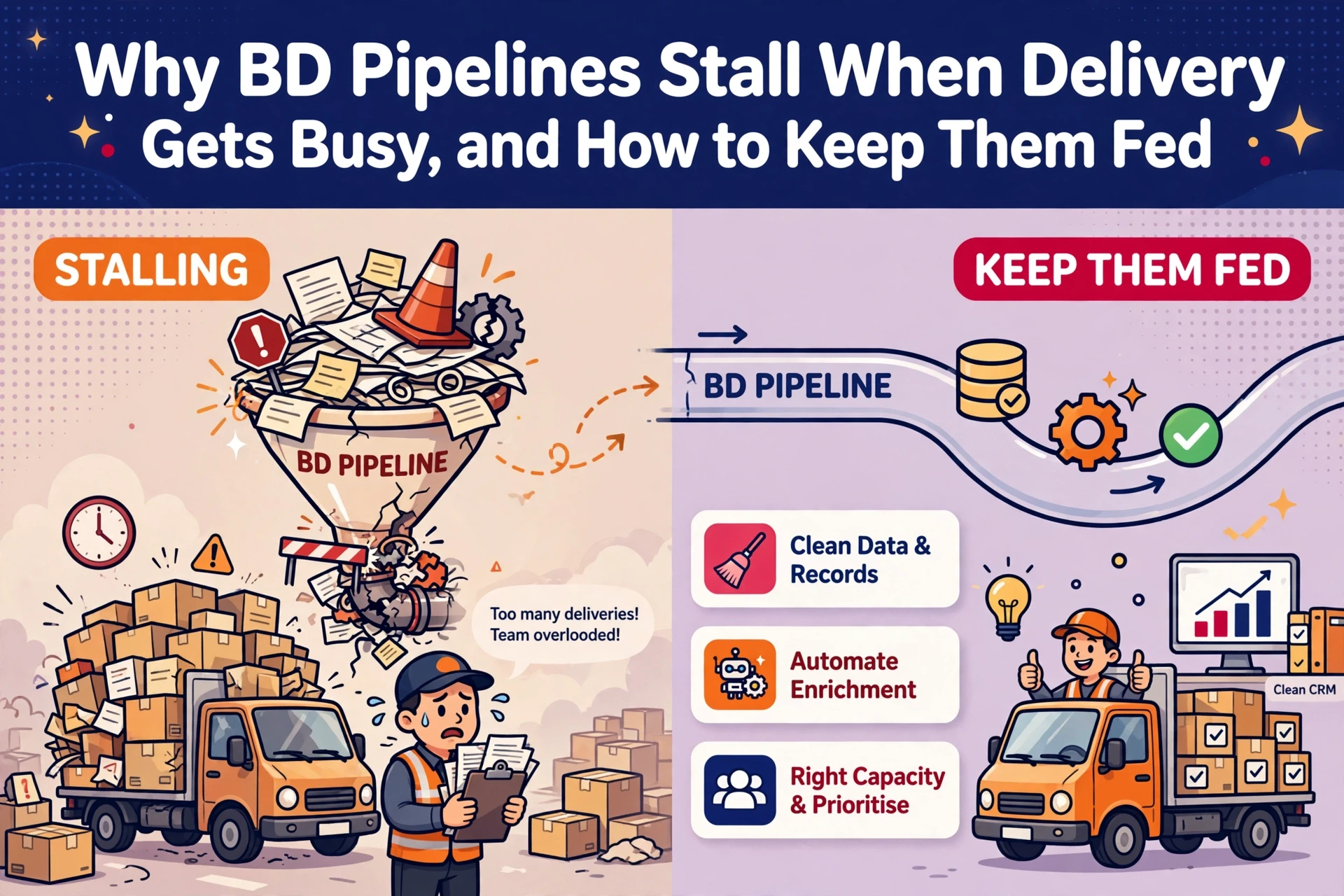
When candidate delivery hits peak volume, business development research is the first diary commitment consultants abandon. Three weeks later, placement activity drops, the recruitment business development pipeline sits empty and the agency enters another feast-and-famine cycle.
The problem is rarely sales effort or conversion rates. The problem is relying on manual weekly research sessions that get dropped as soon as desks get busy.
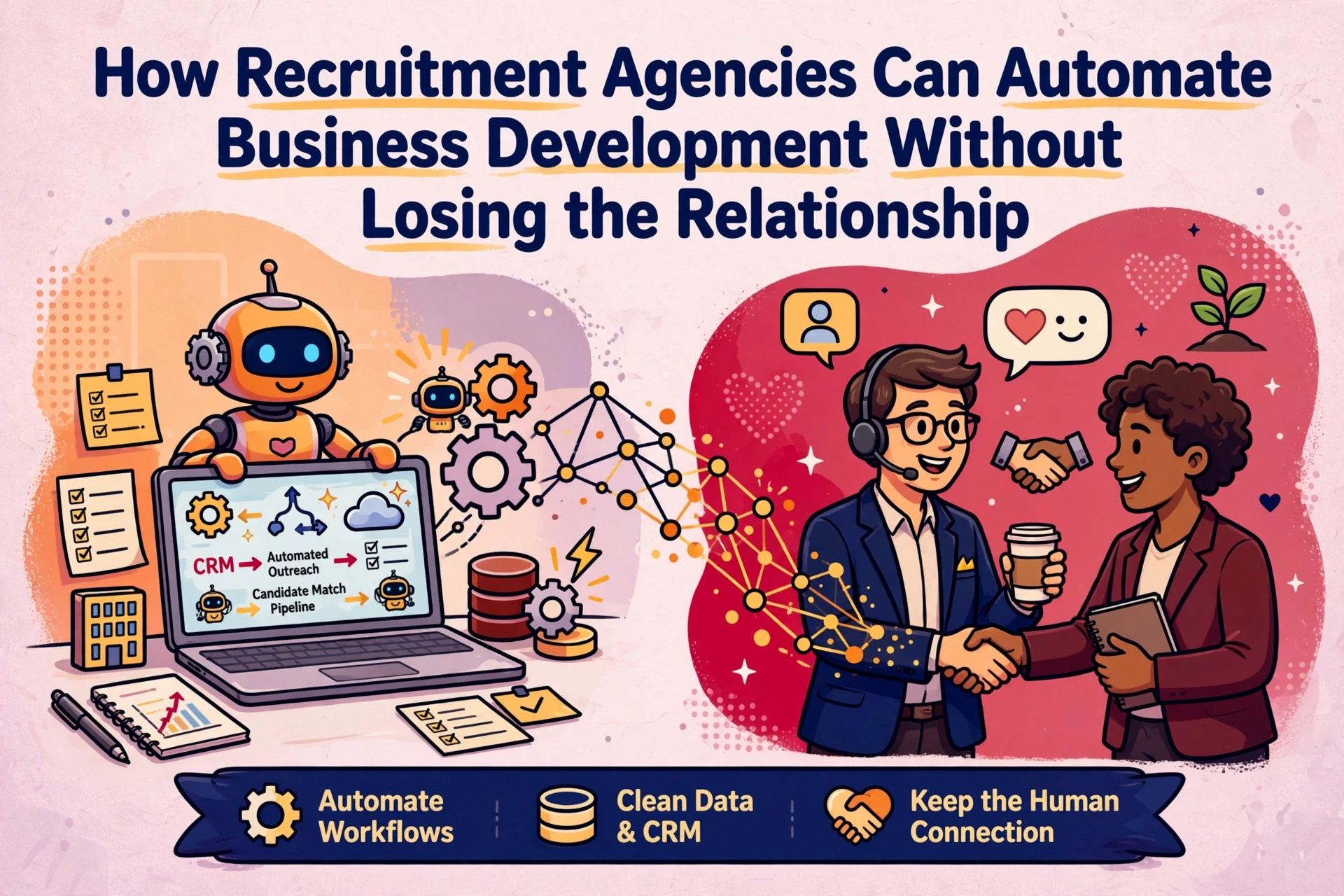
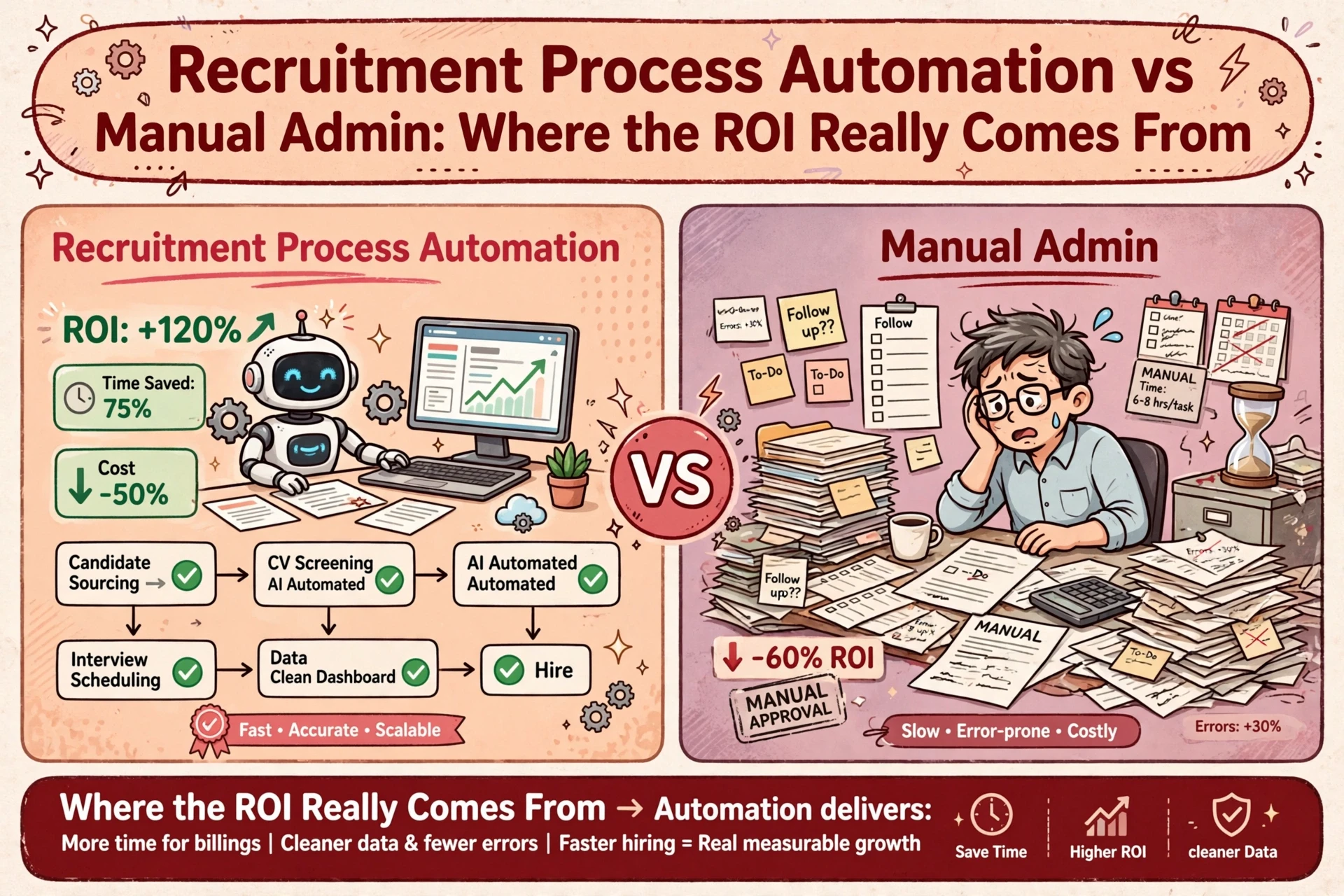
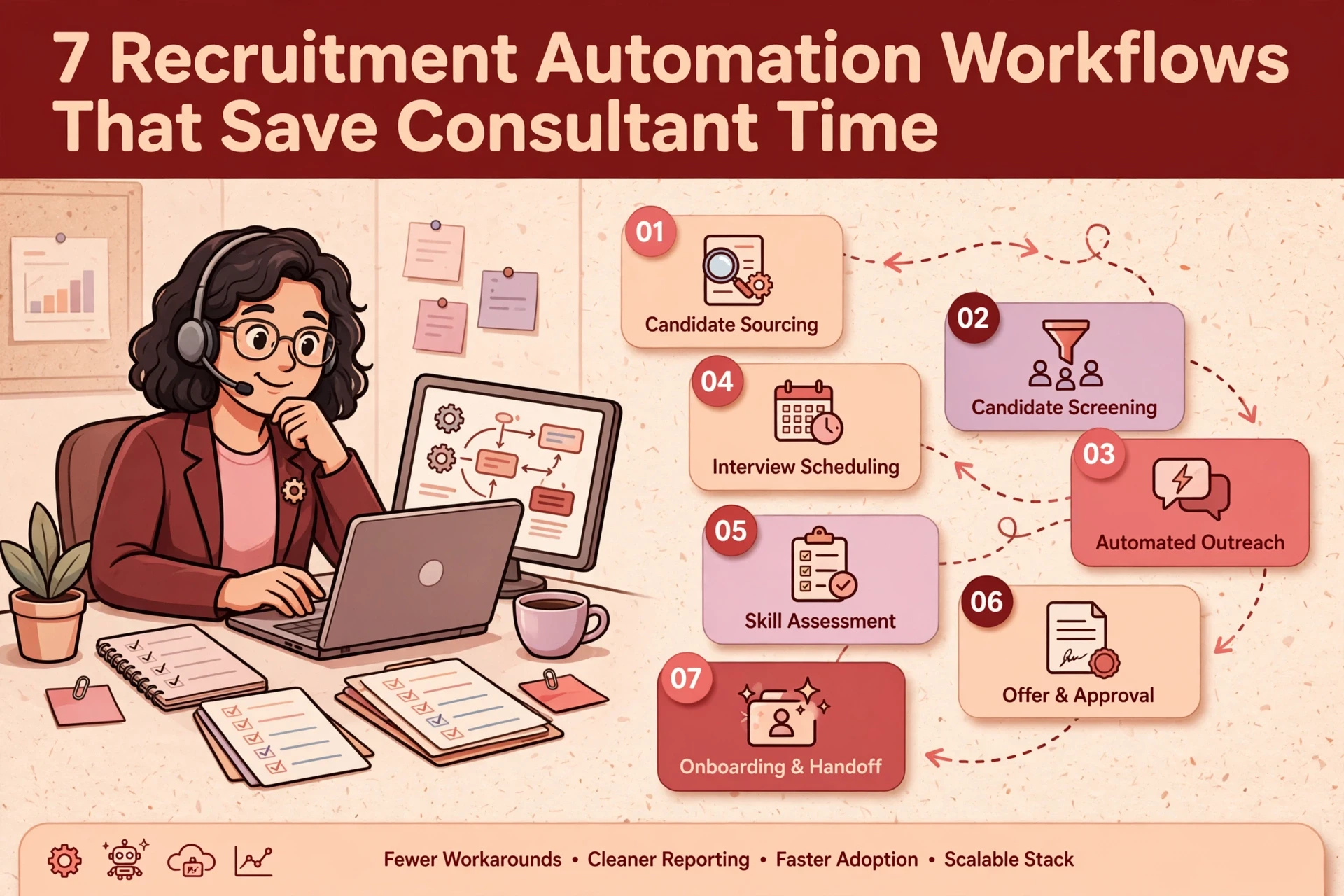
Fixing the feed requires moving account research and trigger monitoring into automated background processes. Target accounts stay updated, records get scored on hiring signals and opportunities route directly to desk owners. Consultants shift their time from building spreadsheets to holding client conversations.
Map what actually feeds your pipeline today
Before fixing a stalled pipeline, you need to map where its raw inputs originate. In most agencies, client prospecting relies on a single fragile entry point: a consultant manually researching target accounts during quiet hours.

Why manual research blocks fail under pressure
Dedicated research sessions feel productive because they generate a list of companies. However, they occupy the least protected slot in a consultant's calendar.
When a client call runs long or a job offer hits complications, list building gets moved to Friday afternoon and then dropped entirely. Missing a single research block creates no immediate penalty. The impact only appears three weeks later when outreach stops producing qualified meetings. Rebuilding momentum takes double the effort. Target account research needs to operate continuously in the background recruitment automation.
The four components of a consistent pipeline feed
A dependable business development feed requires four distinct components working together:
- A target account list that updates automatically instead of being compiled manually each week.
- A scoring model that ranks accounts by potential revenue, headcount, growth metrics and active hiring.
- Signal routing that sends job postings, leadership changes and funding notices straight to the right desk.
- Verified contact data so consultants reach actual decision-makers.
If any component is missing, automated sales efforts waste time. Software can manage list generation, scoring and signal alerts, but contact data accuracy forms the foundation.
Verify contact data before building workflows
Outreach relies entirely on accurate contact information. Before setting up automated alerts or assignment rules, review the state of your existing CRM records.
What to audit in your CRM
Pull a representative sample of records across your key target sectors and evaluate four primary fields:
- Direct email address accuracy
- Direct telephone lines
- Current job title validity
- Exact legal company name matching
Data degrades quickly in recruitment databases. If records have sat untouched for over 12 months, a significant portion will contain invalid contact details or outdated employment statuses.
A initial analysis pinpoints missing fields and identifies which accounts are complete enough to work. Data enrichment can then be scoped as a separate targeted project to fill verified gaps. It is worth evaluating why clean CRM data decides what AI can do for your agency before purchasing additional outreach tools.

Why data structure precedes automation
Automated workflows magnify whatever underlying data quality exists in the CRM. Feeding stale contact details into automated sequences results in high bounce rates, damaged email domain authority and wasted consultant effort on contacts who have changed employers.
Verifying data structure first highlights operational bottlenecks. Some gaps require structured data enrichment, while others require simpler entry standards on the desk. Building on verified data ensures that subsequent scoring and routing workflows deliver usable opportunities.
Build a target account model you can score
Scoring accounts establishes clear operational priorities for the entire agency. Instead of relying on individual consultant preference, an objective framework ranks companies based on verified commercial potential.
The four inputs for account scoring
Rank target companies by evaluating four core criteria:
- Revenue potential: Expected fee value based on typical salary bands and placement terms.
- Headcount: Total workforce size, indicating annual hiring volume.
- Growth indicators: Physical expansion, team scaling or headcount increases over the past 12 months.
- Hiring activity: Active job advertisements across public job boards and company career pages.
Assign each input a basic score from one to five. Weight active hiring highest, as public job postings demonstrate immediate buying intent rather than general growth potential.

Segmenting accounts into operational tiers
Divide the scored master list into clear tiers to direct consultant activity:
- Tier one: High revenue potential and active hiring signals. Assigned to named consultants for direct phone outreach and tailored contact.
- Tier two: Moderate potential or steady growth. Monitored through automated alerts for sudden hiring activity.
- Tier three: Background monitoring only. Updated periodically as external signals change.
A properly configured system recruitment automation workflow updates these scores dynamically as new market data arrives, eliminating manual spreadsheet updates.
Route commercial signals to desk owners
A scored account list identifies who to target. Real-time market signals determine when consultants should make contact.
Signals that indicate immediate hiring needs
Track specific events that correlate with hiring activity:
- Job postings: Multiple open roles or persistent unfilled vacancies.
- Candidate moves: Placed candidates or industry contacts starting new leadership positions.
- Funding events: Secured capital expansion usually precedes team hiring.
- Executive changes: Newly appointed directors frequently re-evaluate existing supplier lists.
- Regional expansion: Opening new office locations or launching new service divisions.
These triggers provide consultants with a clear, relevant reason to initiate contact.
Enforcing signal ownership and SLA response times
Market alerts fail when delivered to shared administrative inboxes. Configure routing logic to deliver specific triggers directly to the responsible biller:
- Assign alerts by industry sector or geographic territory.
- Route updates on existing client accounts directly to the named account manager.
- Forward unassigned prospect signals to designated business development leads.
Establish firm internal response expectations. A hiring signal loses value quickly if outreach is delayed by several days. Reliable workflows data intelligence ensure alerts arrive alongside verified contact information ready for immediate action.
Shift consultant hours from research to conversations
Automating account discovery, scoring and signal delivery alters how consultants spend their working week. Time previously spent searching directory sites moves directly into phone calls and client meetings.
The updated weekly workflow for billers
Instead of starting Monday morning with manual web searches, consultants review a prioritised dashboard of scored accounts flagged by recent trigger events.
The focus shifts to selecting top-tier prospects, reviewing company context notes and initiating phone contact. This structure increases weekly prospect conversations, improves follow-up speed on warm market signals and maintains sales momentum even during heavy delivery periods.
Tasks that must remain human-led
Automation handles data gathering and event monitoring. Human judgment must retain full control over three key areas:
- Message composition: Automated outreach templates sound generic. Senior clients recognise automated communication instantly.
- Relationship timing: Deciding whether to press for a meeting immediately or nurture a contact requires human context.
- Commercial negotiation: Building trust, understanding client pain points and agreeing commercial terms cannot be automated.
Software surfacing the opportunity allows consultants to concentrate entirely on building the commercial relationship recruitment automation.
Separate pipeline infrastructure from daily execution
A stalled business development pipeline is usually an infrastructure issue rather than an activity problem. When prospect research depends on manual effort during busy delivery weeks, sales volume inevitably fluctuates.
Agencies maintain consistent pipeline momentum by separating background target research from daily sales activity. Establishing automated list updates, scoring accounts against clear criteria, verifying CRM data accuracy and routing trigger alerts directly to billers removes the dependency on manual research blocks Syun Consulting. Consultants can then direct their manual effort strictly toward high-value client conversations.
Frequently asked questions
How do recruitment agencies keep a consistent BD pipeline?
Move target account research and trigger tracking into background workflows. Automatically score client accounts on revenue potential, headcount, growth signals and active hiring roles. Route trigger alerts directly to desk owners so consultants focus on calls rather than manual list creation.
How should a recruitment agency prioritise target accounts?
Rank accounts on revenue potential, headcount, expansion indicators and active hiring signals. Weight live hiring activity highest because it shows immediate commercial intent. Divide accounts into tiers so consultants invest personalised outreach in high-value targets while lighter workflows handle secondary accounts.
What hiring signals are worth tracking for agency sales?
Focus on triggers indicating immediate hiring need or budget allocation. Track new job postings, senior leadership hires, funding rounds, expansion announcements and candidate moves into target accounts. Route each alert immediately to the responsible consultant to secure early conversations.
Should CRM data be verified before automating BD outreach?
Yes. Automated workflows amplify whatever underlying data quality exists. Outdated titles, invalid email addresses and incorrect organisation structures damage sender domain reputation and waste consultant time. Audit CRM accuracy across email deliverables, phone numbers and company entities before deploying automated routing.