A funding round lands on Tuesday. The new executive hiring announcement appears on Wednesday. By Thursday, a competitor is already speaking with the founder about scaling their team. That gap is a watching problem, not a market problem.
Most agencies treat signal based prospecting recruitment as chance. Whoever happens to catch the news headline wins the conversation. Building a system replaces luck with process. You can collect public market triggers, route relevant alerts to specific desks and give consultants warm openers rather than cold scripts.
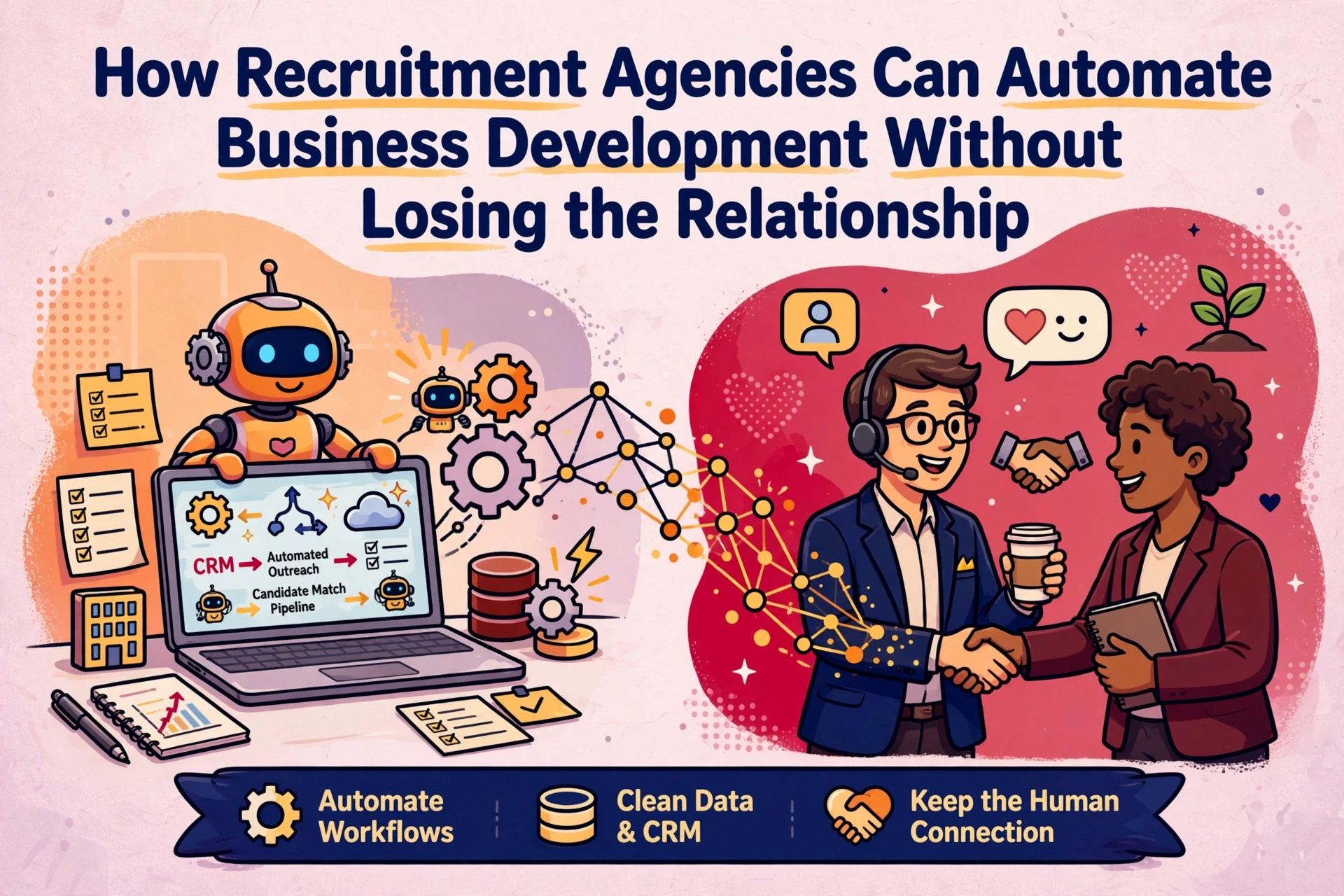
That is what recruitment business development automation should achieve. It is also where ai for recruitment business development offers immediate value. Automated outreach without market signals is simply faster cold messaging. True recruitment automation catches the right commercial moment first. If you want this workflow designed for your desks, review our recruitment automation services.
Hiring signals that indicate genuine demand
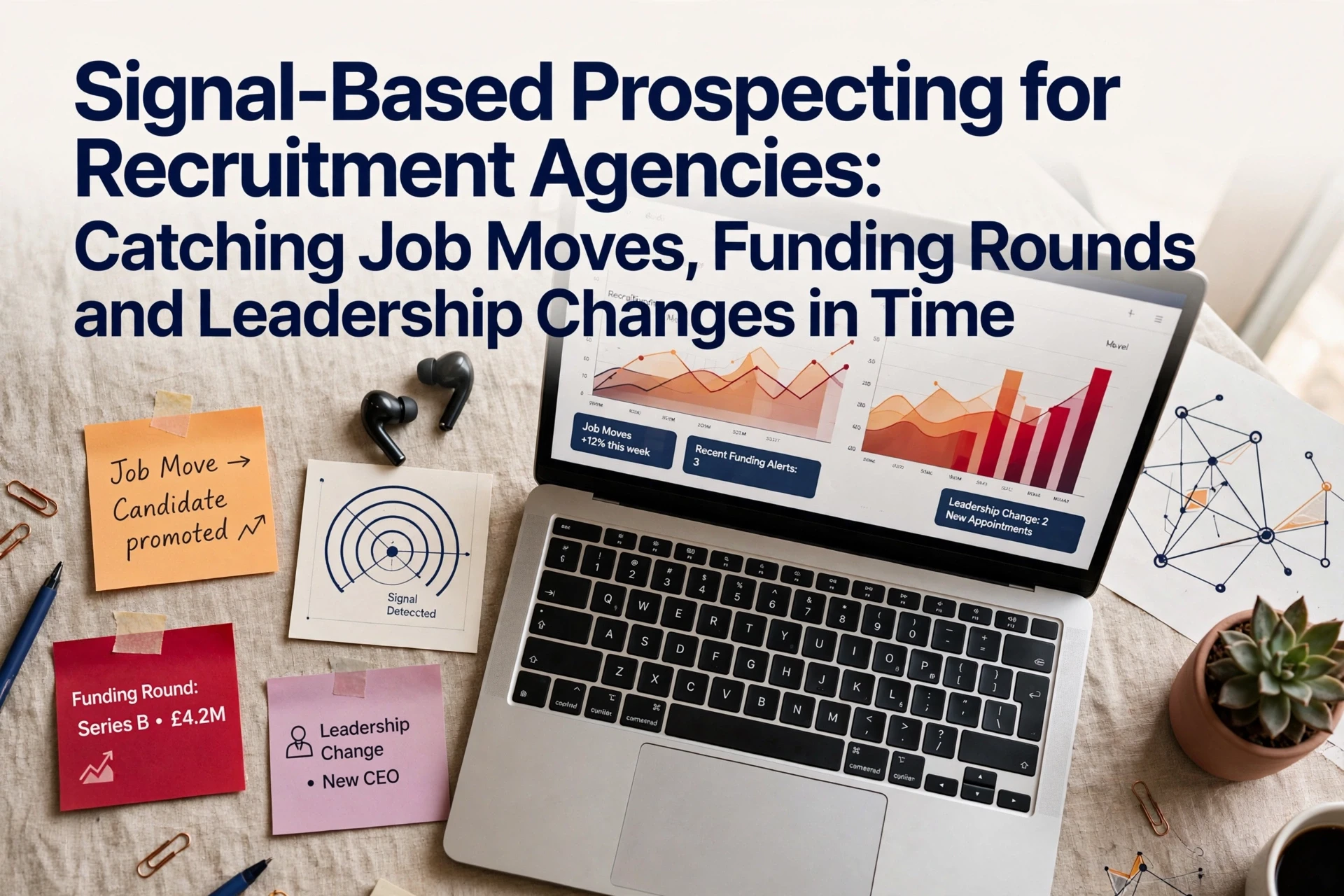
Signal based prospecting recruitment works because recruitment projects start with public events, long before a job advert appears. The objective is sorting market noise from indicators that mean a hire is likely within weeks. Four public triggers reliably pass this test.
Job moves and executive departures
When a director or team lead changes firms, two opportunities open simultaneously. The previous employer must fill a senior vacancy, often with an existing sign-off budget. The incoming executive frequently restructures or hires known talent in their new organisation. Both businesses become relevant prospects immediately.
Fresh funding rounds
Investment rounds carry explicit growth plans. Scaling businesses typically publish headcount expansion goals alongside investment press releases. Tracking public filings gives your consultants a clear reason to make contact. Route funding alerts directly to the desk owner covering that sector.
Leadership changes and new incorporations
A new managing director or chief executive usually arrives with a mandate to rebuild or expand. Incoming leaders rarely carry loyalty to incumbent recruitment suppliers. New company registrations matter as well, as newly registered entities frequently recruit core teams within two quarters. Accurate data intelligence work ensures you spot these patterns early.
Acquisitions and persistent hiring activity
Corporate acquisitions trigger organizational restructuring, departures and new specialist roles. Public job posting patterns also reveal demand. A business advertising the same role family repeatedly is demonstrating an internal delivery bottleneck. Automating alert routing for these events is a core element of recruitment business development automation, and having recruitment automation designed around your watchlists prevents manual oversight.
Building narrow watchlists that consultants will use
Start from proven clients
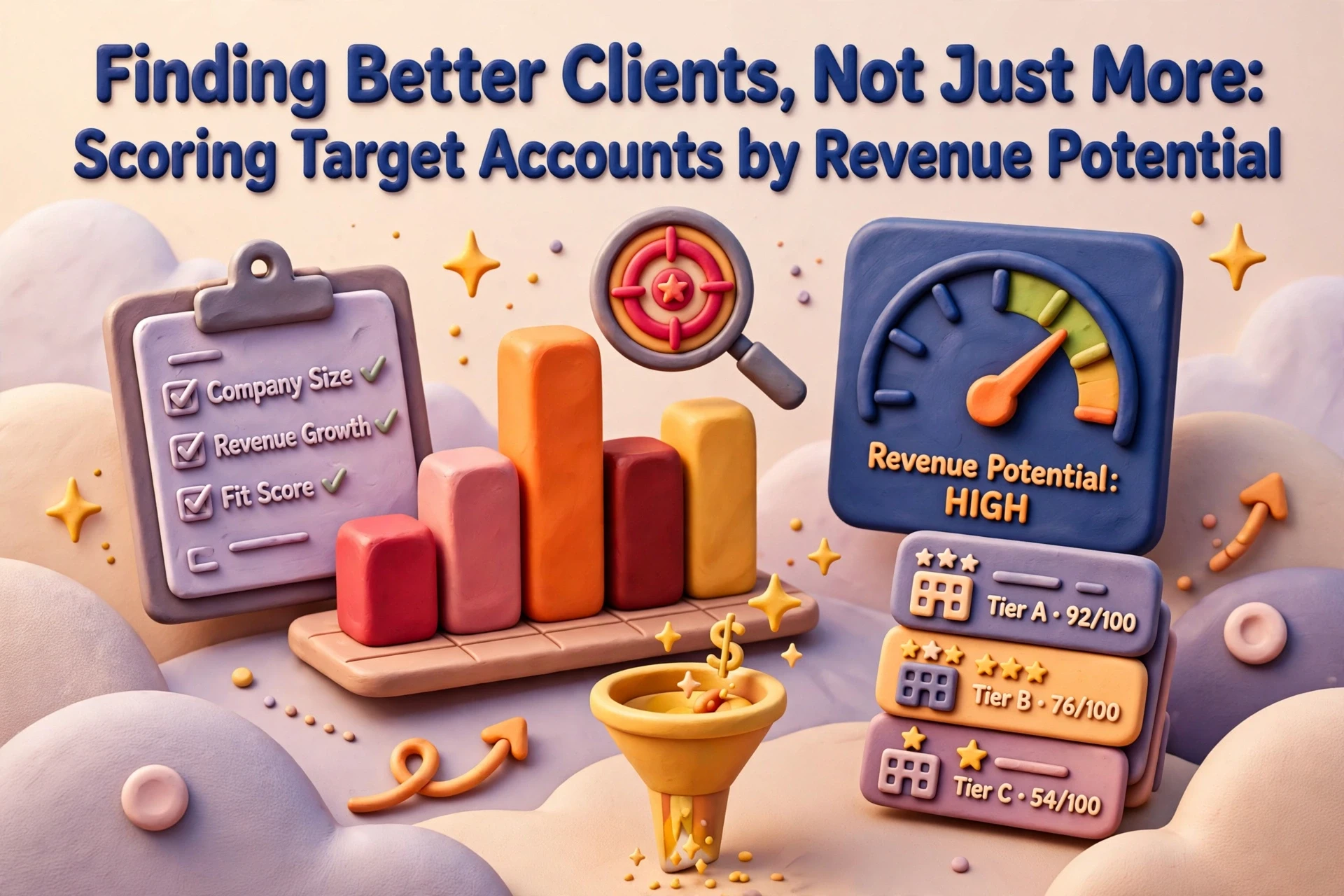
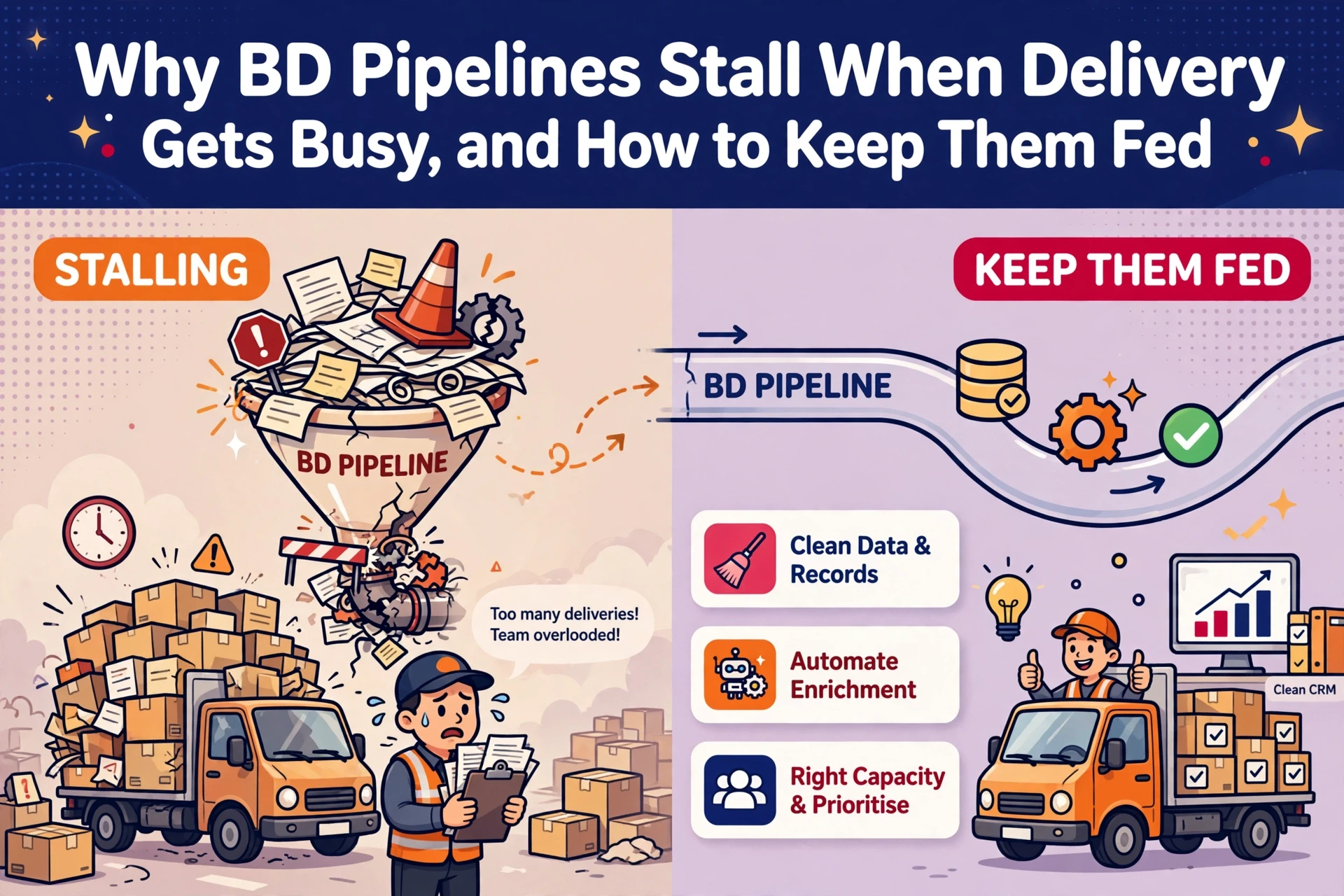
Effective watchlists remain focused. Review your agency's last 20 successful placements or retained projects. Record the sector, employee headcount and buyer role behind each assignment. This pattern reveals which organisations your consultants can credibly pitch. When BD pipelines stall under delivery pressure, maintaining a concise watchlist keeps daily habits consistent.

Define precise triggers for each account
Adding a target company to a list is insufficient. Define the exact event that requires action, such as a director resignation, a funding filing or a rise in niche vacancies. Assign each trigger to a specific data source and desk owner. Unclear triggers generate ignored alerts.
Set review schedules and alert limits
Cap the number of notifications each consultant receives per week. Five actionable alerts get researched and called. Fifty alerts get archived unread. Audit target lists quarterly by removing inactive businesses and adding prospects that mirror recent wins. Incorporating this structure into your CRM setup represents a standard data intelligence project.
Capturing public data context automatically
Primary UK signal sources
The most valuable market signals are public and accessible. Companies House filings show officer appointments, resignations, registered address changes and new incorporations. Annual accounts reveal employee headcount shifts and cash positions. Company news releases, trade publications and LinkedIn movement data provide additional context. The Companies House blog outlines how public filing records are updated.
Turning raw filings into conversation openers
A bare data filing is background information. Context transforms it into a sales opportunity. A new finance director combined with growing headcount in filed accounts suggests operational scaling friction. The opener becomes a direct question about resourcing that growth phase, rather than a generic service pitch.

Balance automation with human judgement
Automate tracking, matching, record deduplication and context compilation. Leave commercial evaluation to experienced consultants. A consultant determines whether a signal is actionable, which desk takes ownership and how to initiate contact. Technology gathers context, while consultants build client relationships.
Routing signals to the right desk
A market signal loses value if sent to the wrong consultant or left in a shared inbox. Establish clear internal ownership rules before implementing software tools.
Establish ownership rules early
Define routing logic logically first. Direct fintech funding notifications to the fintech desk lead. Route senior leadership changes at key client accounts to the account manager holding that relationship. Resolve edge cases upfront, ensuring unassigned sectors route to a designated business development lead for review.
Deliver concise signal briefs
Provide consultants with concise alert summaries that require under a minute to evaluate. Include the company name, event details, commercial context, suggested opening angle, source link and CRM record. Relevant context matters far more than high notification volume.
Track conversion outcomes
Record an outcome for every routed signal, such as contacted, discarded or irrelevant. Review these logs monthly. Frequently ignored signals indicate that watchlist criteria or routing parameters require refinement.

If you need structured lead routing configured across your desks, recruitment automation addresses the workflow design requirements.
Turning market signals into warm conversations
Evaluate before making contact
A market signal is an opportunity for evaluation, not an instruction to send mass emails. Consultants must confirm whether the signal matches their desk capability and whether the agency offers genuine value. A funding round in an unfamiliar market is noise. An executive appointment at a client firm placed two years ago warrants a direct phone call.
Structure effective openers
Use a four-part structure for opening communications:
- State the observed fact. "I noticed your team recently opened a regional office in Manchester."
- Connect the event to an operational challenge. Relate the expansion to typical hiring constraints in that market.
- Provide a brief proof point. Reference a relevant placement, industry insight or mutual market connection.
- Offer a low-friction action. Suggest a brief conversation rather than requesting a formal meeting.
This approach demonstrates research and positions the outreach as a relevant commercial observation. If your agency requires this workflow configured across existing systems, Syun Consulting handles the technical setup.
Avoid common implementation errors
Three common mistakes undermine signal-based prospecting. Broadcasting every notification across the entire agency leads to multiple consultants contacting the same business. Automating initial outreach messages turns warm market observations into generic template emails. Delaying outreach until weeks after an event renders the intelligence obsolete. Assign each signal to a single owner, allow them to draft tailored outreach, and initiate contact within two business days.
When market opportunities are missed due to manual processes, establishing structured watchlists and hand-off rules restores commercial timing. Speak with Syun Consulting to review workflow architecture for your consultancy.
Frequently asked questions
How can a recruitment agency automate business development?
Automate data watching, collection and routing rather than candidate or client contact. Build watchlists from public databases such as Companies House, aggregate hiring triggers automatically, and route each context-rich alert to a single consultant. The consultant evaluates the opportunity and writes the opening message. This maintains relationship quality while eliminating manual research time across your sales desk.
How should an agency prioritise which clients to target for signal-based BD?
Start by reviewing your agency's last 20 successful placements or retained projects. Map the common sectors, employee headcounts and buyer job titles across those accounts. Limit your watchlist to target businesses that match this exact profile. Narrow lists yield relevant alerts, whereas broad company lists generate excessive notifications that consultants quickly ignore.
Which UK public data sources provide reliable hiring signals?
Companies House filings offer timely public indicators, including new director appointments, officer resignations, registered address changes and fresh company incorporations. Annual accounts reveal headcount growth trends and cash positions. Complementing these with trade press releases, company career page updates and public job advert monitors provides comprehensive coverage of upcoming hiring demand.
How quickly should consultants act on market hiring signals?
Consultants ought to review and act on relevant market signals within 24 to 48 hours. Public events like funding announcements or leadership changes attract competitor attention immediately. Contacting a decision-maker six weeks after a signal becomes public means competing against established supplier lists, whereas quick outreach positions your firm as an alert market specialist.