Eighty applications land on one specialist vacancy. Automation can sort them, summarise them and route them in seconds. What it should never do is quietly decide who never gets a human look.
That is the line many agencies cross without noticing. They automate recruitment workflows to save time, then find candidates screened out by rules nobody reviewed and clients chasing replies no template ever sent. The problem is rarely the tool. It is the absence of an operating model for where automation stops and accountable decisions start.
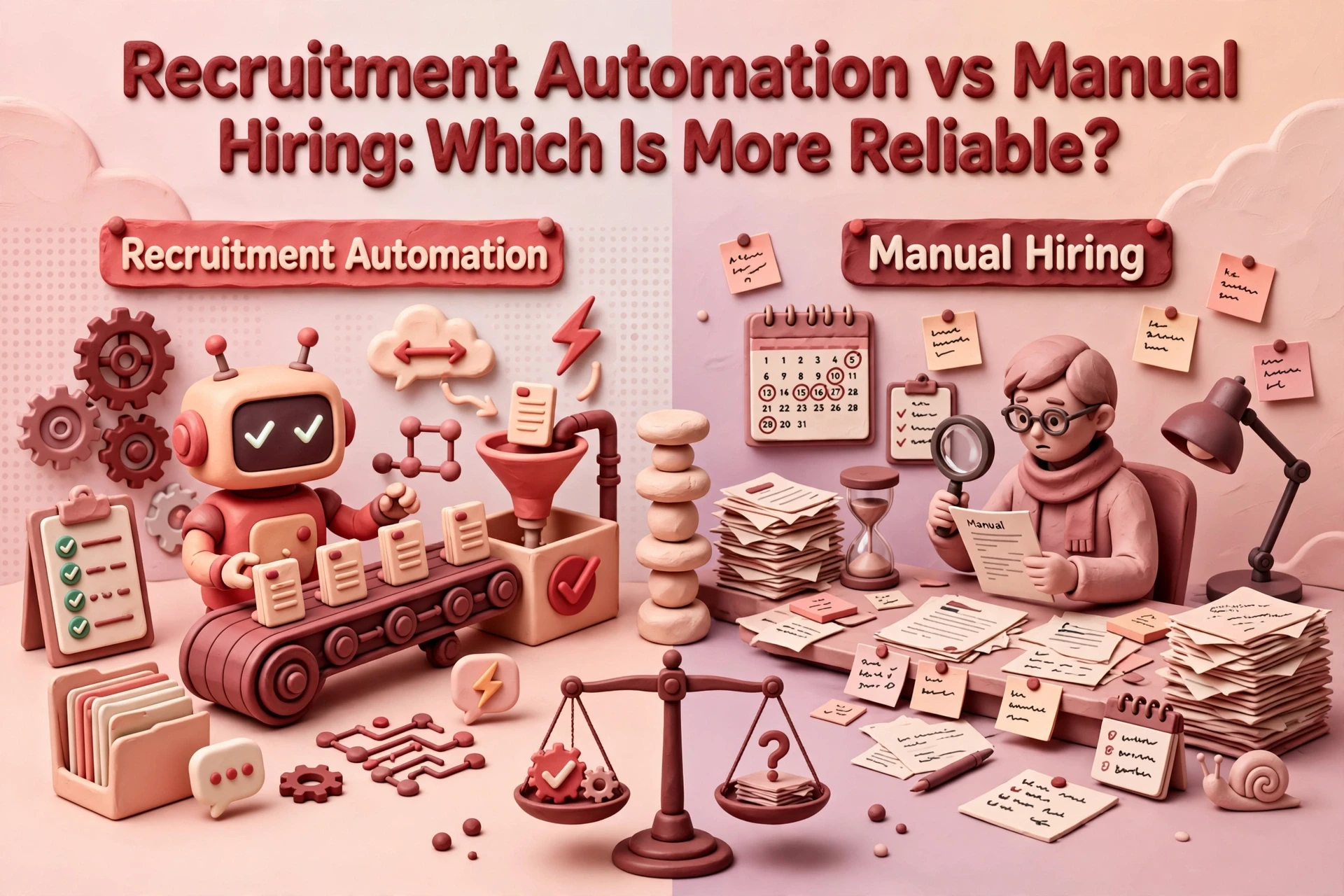
A workable model splits tasks by risk and reversibility. Software carries the routine admin while named consultants retain full ownership of placement decisions.
Map the workflow before choosing automation
Automating a broken process only makes the mess move faster. Write down what actually happens between intake and placement before buying or switching on any automation feature. Most agencies discover far more hand-offs and waiting time than they expected.
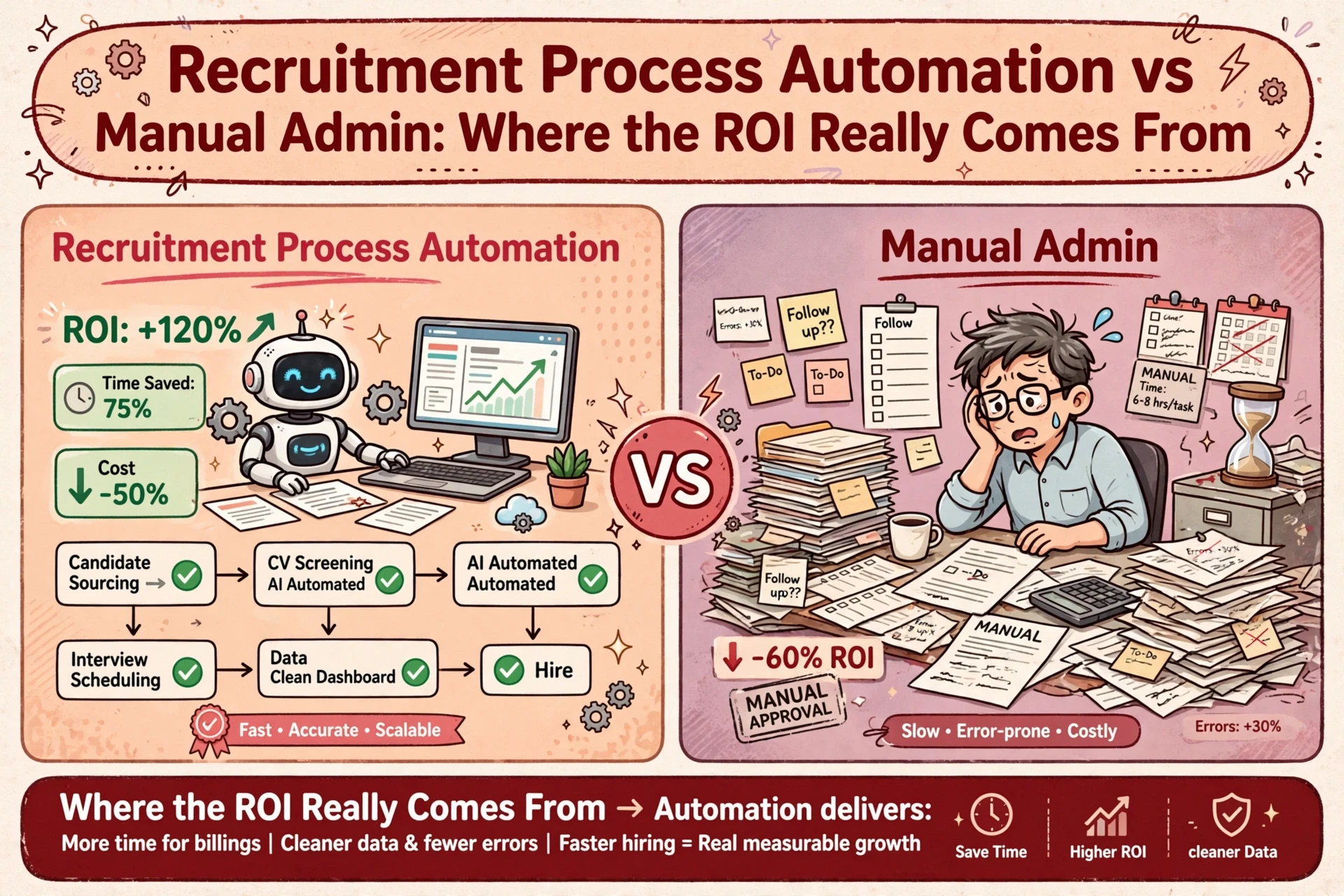
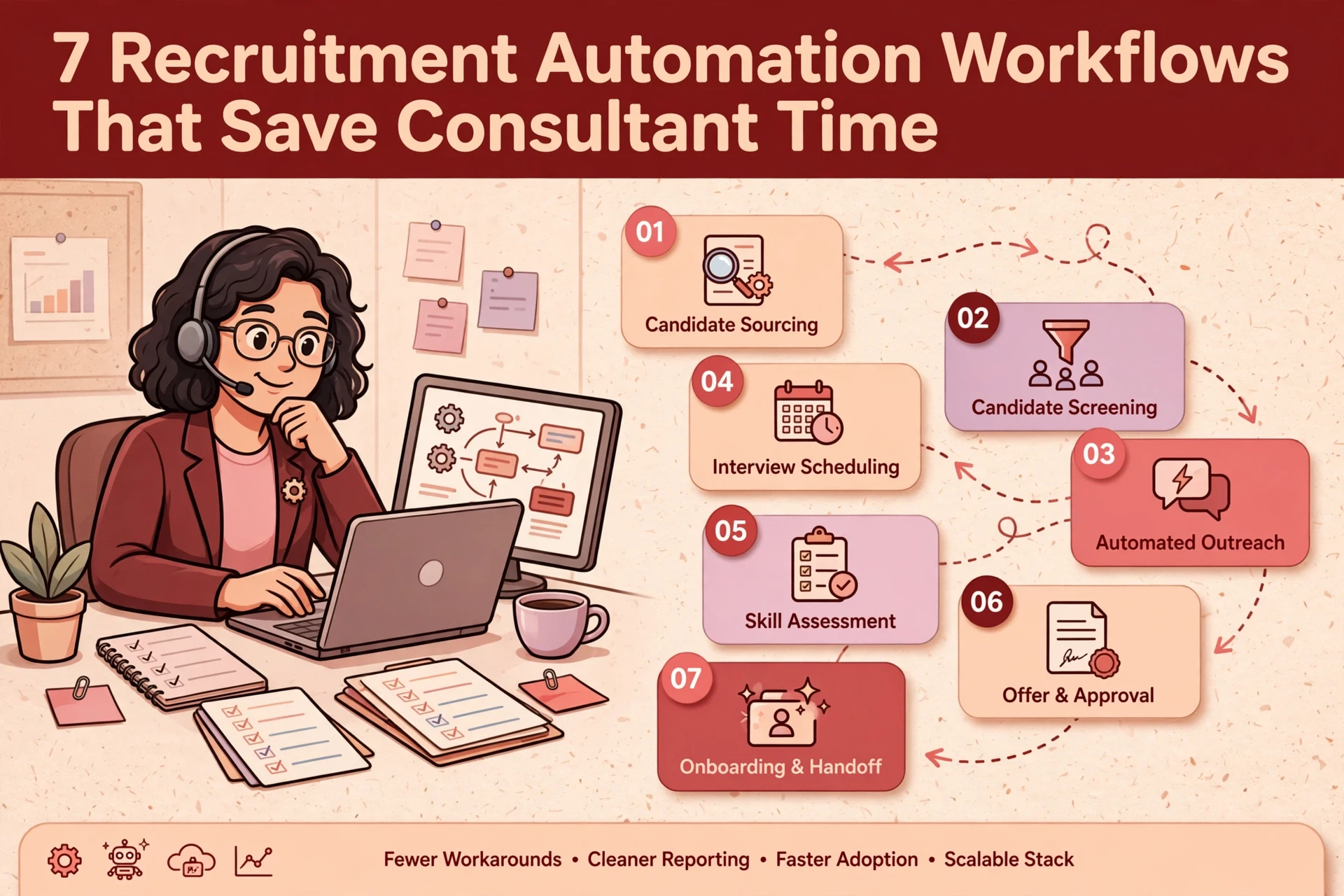
Separate routine tasks from judgement calls across your entire delivery chain. Routine tasks follow identical rules every time. Sending application acknowledgements, updating candidate status fields and chasing interview availability belong in this group. They are safe candidates for full automation.
Judgement calls require context and commercial awareness. Deciding whether a candidate with an atypical background deserves an interview or setting an offer structure requires human discretion. Software can gather and structure the data, but a consultant must own the decision.
Find the bottleneck that costs the most total hours across your team. Posting a job happens once per role, while reviewing candidate profiles happens dozens of times. Screening and data entry usually consume more billable time than scheduling. Fix the largest drain first, establish a clear baseline and measure the result before expanding.

Reviewing your tech stack alongside recruitment data intelligence tools helps identify where data flow breaks down during these administrative steps.
Classify actions by risk and reversibility
Sort every task on your process map using two questions: how much damage does a mistake cause, and how easily can you undo it? Governance models such as the NIST AI Risk Management Framework rely on this principle: match oversight directly to risk.
Use a simple three-level decision model across your agency operations:
- Green (Full automation): Logging phone calls, updating standard CRM fields, sending interview reminders and staging contact records.
- Amber (Automate then review): Summarising CVs, drafting outreach messages and enriching candidate profile data. A consultant approves the output before anything leaves the agency.
- Red (Human decides): Shortlisting candidates, issuing rejections, making offers and managing fee negotiations.
For amber actions, structure the hand-off clearly. Oversight fails when a consultant holds nominal responsibility but lacks the context or time to evaluate the suggestion properly. Research on human oversight of automated systems shows that recruiters defer to automated recommendations up to 90% of the time if no verification step is enforced.

Define three requirements for every amber hand-off:
- Named accountability: Assign a specific individual, not a generic team inbox.
- Contextual reasoning: Show the consultant both the output and the source data used to create it.
- Time limits: Set clear SLAs for review so unapproved drafts do not stall candidate communication.
Automate administration around the core decision
The safest productivity gains come from automating the administrative tasks surrounding a decision, rather than the decision itself.
Use automation for preparation, data routing and follow-up. Systems can parse inbound CVs, build standard summaries, pull contact details and schedule interview slots. Specialised data workflows, such as those built using data intelligence service, can enrich candidate records directly while keeping your CRM as the single source of truth. The consultant opens a structured profile rather than searching across multiple systems.
Follow-up communications are equally suited to automated workflows. Sending status updates, confirmation notes and task reminders carries minimal risk and keeps candidates informed throughout the process.
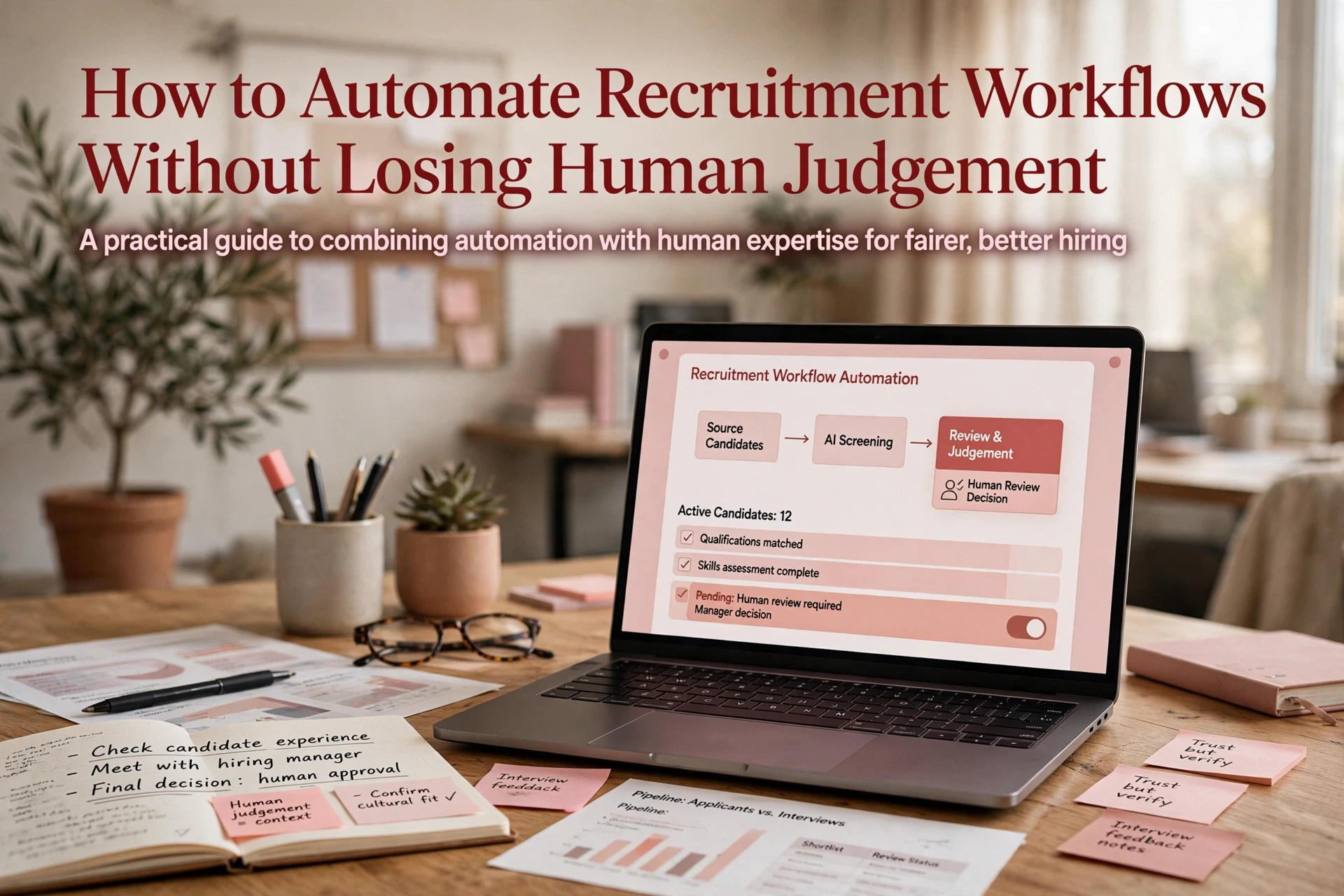
Place explicit approval gates wherever commercial judgement begins. Rejections, candidate shortlists and contract terms must require manual sign-off. Define what happens when a request is approved, rejected or left pending before configuring your workflow automation rules.
Our experience across 20+ years in recruitment technology shows that agencies achieving high consultant adoption build automation around existing daily habits rather than forcing team members into secondary tools.
Embed data protection and compliance by design
Automating candidate evaluation without adequate human oversight creates legal and regulatory exposure under UK data protection law. Guidance from the ICO highlights that automated decision-making requires clear safeguards, lawful basis and explicit accountability.
Ask software vendors six essential compliance questions in writing before procuring new automation software:

- Have you completed a formal Data Protection Impact Assessment for this feature?
- What is the precise lawful basis for processing candidate data through this tool?
- How are data controller and processor obligations defined in legal contracts?
- What empirical evidence demonstrates how the software handles potential algorithmic bias?
- How does the system inform candidates when automated processing takes place?
- Does the system restrict data collection strictly to what is necessary for the role?
Vague answers to these questions signal potential compliance risks that require resolution before contract execution.
Maintain operational transparency. Under UK GDPR, candidates have rights regarding automated processing and profiling. Provide clear mechanisms for candidates to request human review of decisions, log system outputs alongside human approvals, and audit internal placement data regularly to maintain fair recruitment standards.
Pilot single workflows using clear baselines
Select one high-frequency administrative task, document current baseline metrics, execute a brief pilot and measure the resulting changes against your baseline.
Set evaluation metrics beyond basic processing speed. Speed alone is an incomplete measure of efficiency. Track quality indicators including shortlist conversion rates, candidate response rates and hiring manager satisfaction scores. Document pass and fail criteria prior to launch to prevent subjective assessments of performance.
Run staged rollouts starting with one specialist desk or a small group of senior consultants. Compare pilot performance directly against historical CRM data to identify edge cases early. Keep a named consultant approving all client and candidate communications during the trial phase.
If the pilot achieves target metrics, roll the workflow out across adjacent teams. If performance drops or data quality degrades, adjust the workflow parameters or pause rollout.
Establish clear operating standards and governance
A single successful pilot does not guarantee long-term operational success. Document proven automation processes to establish standard operating procedures across the agency. ISO 30405 recruitment guidelines emphasize that hiring processes require formal structure, regular review and continuous measurement.
Assign single-point ownership for every automated process using an accountability framework:
- Responsible: The consultant or operator executing the workflow step.
- Accountable: The team leader or director responsible for final decision quality.
- Consulted: Subject matter experts who advise on system configuration.
- Informed: Administrative staff and ops leads monitoring system output.
Review automated workflows quarterly to verify operational effectiveness. Evaluate whether consultants follow established procedures or bypass system controls, verify data accuracy across CRM records, and adjust workflows as agency desk structures or client requirements evolve.
Setting your agency's automation boundaries
Automation should eliminate administrative drag while protecting the human relationships that drive placement fees.
Start by auditing your current CRM workflows. Identify the administrative tasks that consume consultant hours without requiring commercial discretion, implement strict approval gates for candidate screening and placement decisions, and establish single-point ownership for every system output.
Keeping consultants accountable for decisions while software handles repetitive tasks builds an efficient operation without compromising client trust or candidate experience.
Frequently asked questions
How can recruiters automate workflows without losing candidate quality?
Automate the administration around a decision, not the decision itself. Let software handle acknowledgements, status updates, CV parsing and scheduling, and keep shortlisting, rejections and offers with a named consultant. Pilot one workflow against a baseline and track quality measures such as shortlist conversion and candidate response rates, not just processing speed.
Which sourcing tasks can be automated safely?
Automate the preparation and routing around sourcing, and keep the judgement with a consultant. That covers staging contact records, enriching profile data and logging activity. Drafted outreach should be reviewed before it is sent. Start with one workflow, record how long it takes now and compare after a short pilot.
How do we decide which recruitment tasks to automate?
Sort each task by risk and reversibility. Full automation suits low-risk steps that are easy to undo, such as logging calls, updating standard fields and sending interview reminders. Summaries and drafts should be automated then reviewed. Keep consequential decisions with a person, give every automated process one named owner and review it quarterly.