
Job board statistics can easily mislead recruitment agency leaders. When Adzuna reported that advertised UK graduate vacancies fell to 8,383 in July 2026, a 45% year-on-year drop and the lowest reading since 2016, headlines suggested entry-level hiring had collapsed. The reality is more nuanced. Advertised postings measure public job board listings, not total completed hires or underlying desk demand.
What the July Adzuna data actually shows
Adzuna counted 8,383 live UK graduate vacancies in July 2026. This represents a 45% drop compared to the same month in 2025 and marks the lowest count since the job aggregator began tracking the index in 2016, as reported by The Guardian. For context, the platform recorded over 55,800 advertised graduate roles at its peak in 2017. July's figure represents barely a sixth of that volume.
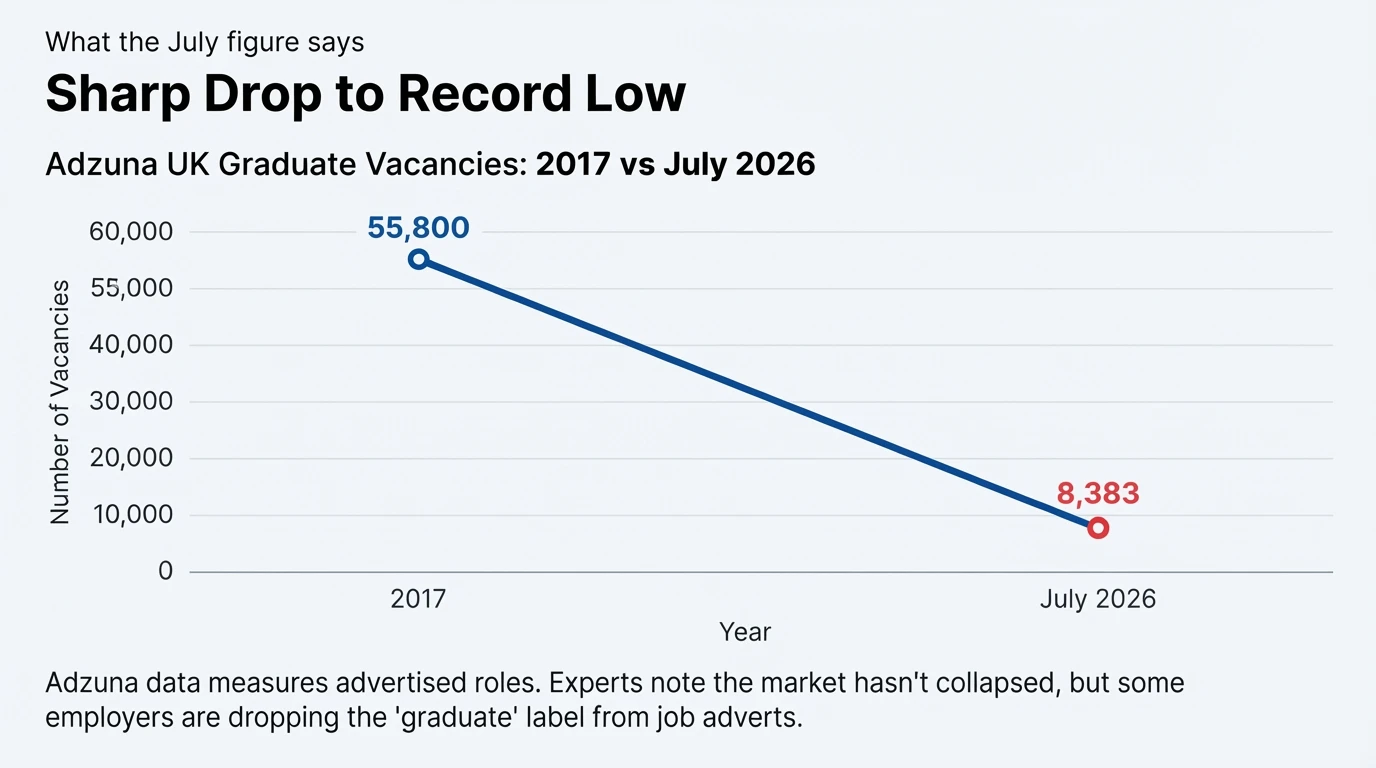
Adzuna co-founder Andrew Hunter described the figure as a step backwards rather than a temporary blip. Increased employer national insurance contributions and higher statutory minimum wage rates have raised the baseline cost of junior headcount. At the same time, some businesses have begun shifting entry-level administrative tasks to automated workflows.
The squeeze is visible across wider entry-level recruitment, but aggregate data can easily obscure sector differences. Adzuna recorded 2.14 jobseekers per vacancy in July across all roles, up from 1.93 a year earlier. While sectors such as healthcare and hospitality reduced public postings, travel, teaching and construction continued to add roles.
Why advertised vacancies do not equal completed hires
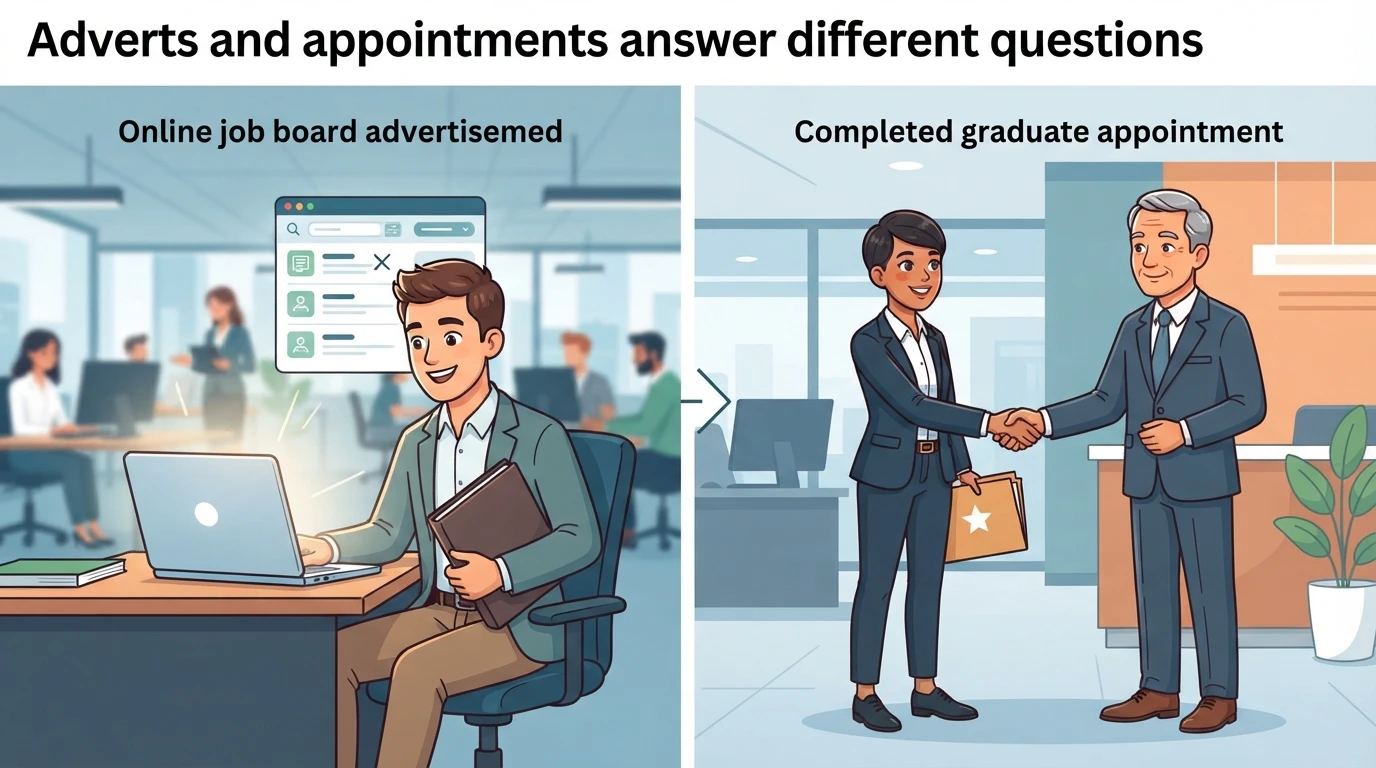
Headline job board figures measure public adverts, not completed hires. Reading Adzuna's July reading as proof that graduate recruitment has collapsed by 45% misinterprets what the data tracks.
Job aggregators compile active listings across web boards. An advert confirms an employer posted a job online in a given month. It does not show whether the position was filled, how many candidates were hired, or whether the placement occurred through that specific advertisement.
Many graduate hires occur outside job boards entirely. Higher education campus recruitment, direct talent pools, referral networks and structured graduate schemes frequently operate without public job board postings. As graduate employment expert Charlie Ball told the BBC, the wider market has not collapsed. Instead, many employers have stopped using the specific word graduate in job titles, even when hiring recent university alumni.
Data from employer bodies supports this distinction. Research from the Institute of Student Employers indicated that graduate hires fell by 8% year-on-year, rather than the 45% decline seen in public job postings. Demand is softer, but the drop in public listings exaggerates the actual reduction in hires.
Evaluating market shifts against your own CRM data
National job board indexes provide general context, but agency leaders should base operational strategy on internal CRM intelligence. Macro statistics blend different sectors, regions and business models into a single figure.
Before shifting desk focus or changing headcount, compare national headlines with your agency CRM metrics. Review job orders received over consecutive quarters, client conversion rates and average time-to-fill for entry-level positions. If your own pipeline shows consistent placement velocity, macro job board dips likely reflect sectors your agency does not service.
Inconsistent CRM data entry often hides genuine desk opportunities. Agencies that rely on free-text job titles rather than structured tagging frameworks struggle to identify candidate skills that cross desk boundaries. Establishing a clear recruitment data intelligence strategy ensures desk performance is evaluated against structured internal data rather than external news cycles.

Practical steps for recruitment agency leaders
When headline vacancy data fluctuates, agency directors should focus on internal data quality and targeted business development.
- Audit CRM tag structures. Replace free-text job titles with structured skill tags. Standardised taxonomy allows consultants to map entry-level candidates across multiple active roles when specific graduate titles decline.
- Track client job order velocity. Measure new job orders weekly per desk. Comparing job order inflows against candidate submittal rates gives an early warning of demand shifts before placement revenue is affected.
- Re-evaluate entry-level role descriptions with clients. Engage hiring managers on how job requirements are defined. Employers adjusting to higher employment costs often re-scope roles around specific technical skills rather than traditional graduate labels.
- Use external data as a client conversation opener. Share market observations with clients to discuss workforce planning. Asking how client intake models are adapting builds advisory credibility and uncovers unadvertised hiring needs.
Deploying a structured data intelligence service helps agencies identify which desks generate reliable margins regardless of public job board volatility.
Making data-led choices for your agency
Reacting to aggregate job board headlines risks misallocating agency resources. Public advert counts reflect posting habits and advertising spend as much as underlying labour demand.
Focus operational decisions on verifiable CRM trends, client placement velocity and structured database intelligence. By auditing internal data structures and monitoring active job order flow, agency leaders can navigate broader economic shifts with confidence.
Frequently asked questions
Did UK graduate hiring drop by 45% in July 2026?
No. The 45% reduction reported by Adzuna refers to advertised job postings on public job boards, not total candidate hires. Industry survey data from the Institute of Student Employers showed a much milder 8% decline in completed graduate hires, as many employers recruit directly without public job adverts.
How should agency leaders test whether an entry-level desk is slowing down?
Agency leaders should evaluate internal CRM records rather than generic vacancy indexes. Track weekly job order volume, client interview requests and placement conversion rates over consecutive quarters. Standardised CRM data entry ensures operational decisions reflect real desk demand rather than media headlines.
Why are employers changing how entry-level positions are advertised?
Increased employment costs and automated filtering tools have prompted employers to re-evaluate entry-level job specifications. Many companies have dropped the label graduate from job postings to broaden candidate pools, while others fill junior positions through internal talent pipelines and direct campus engagement.