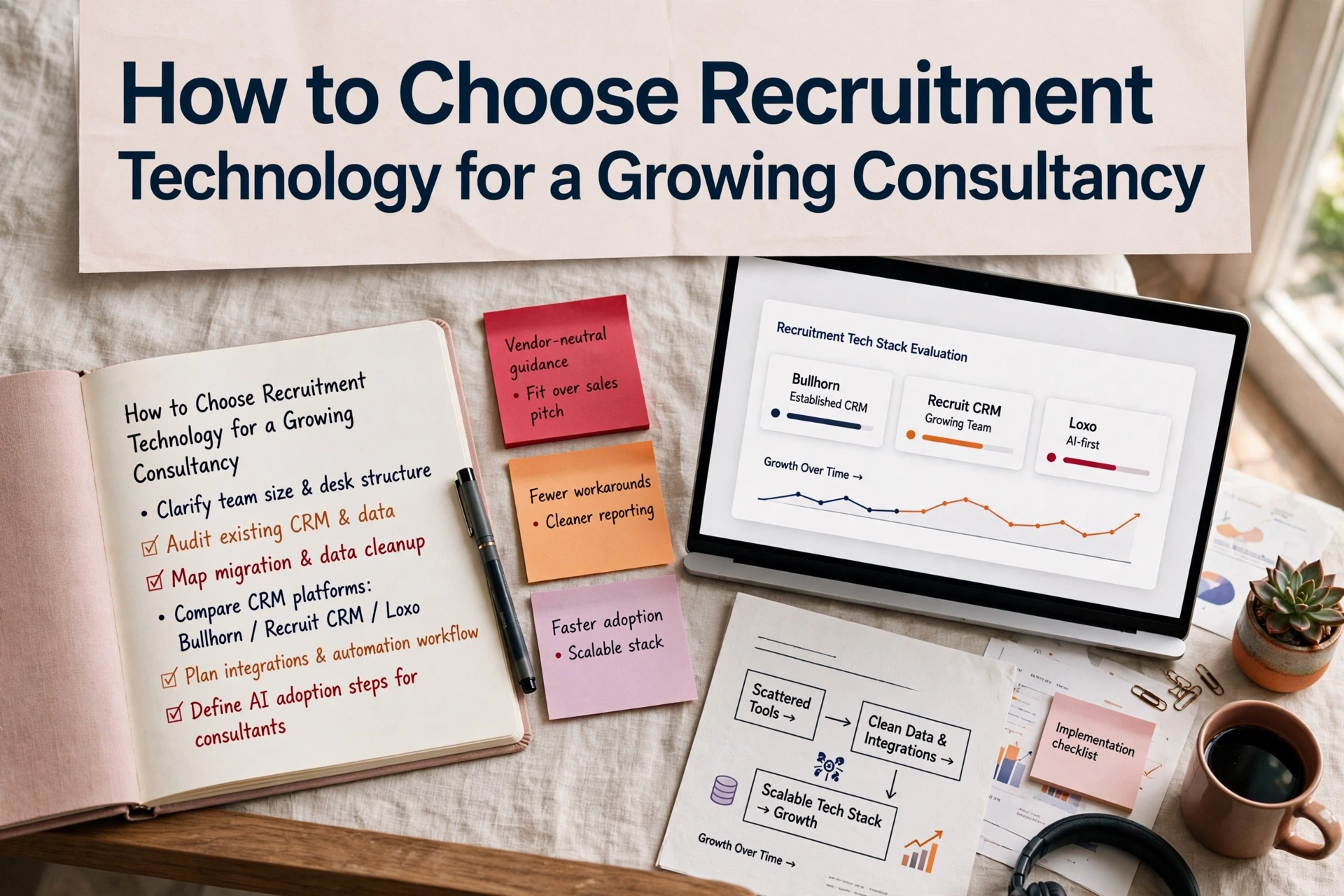
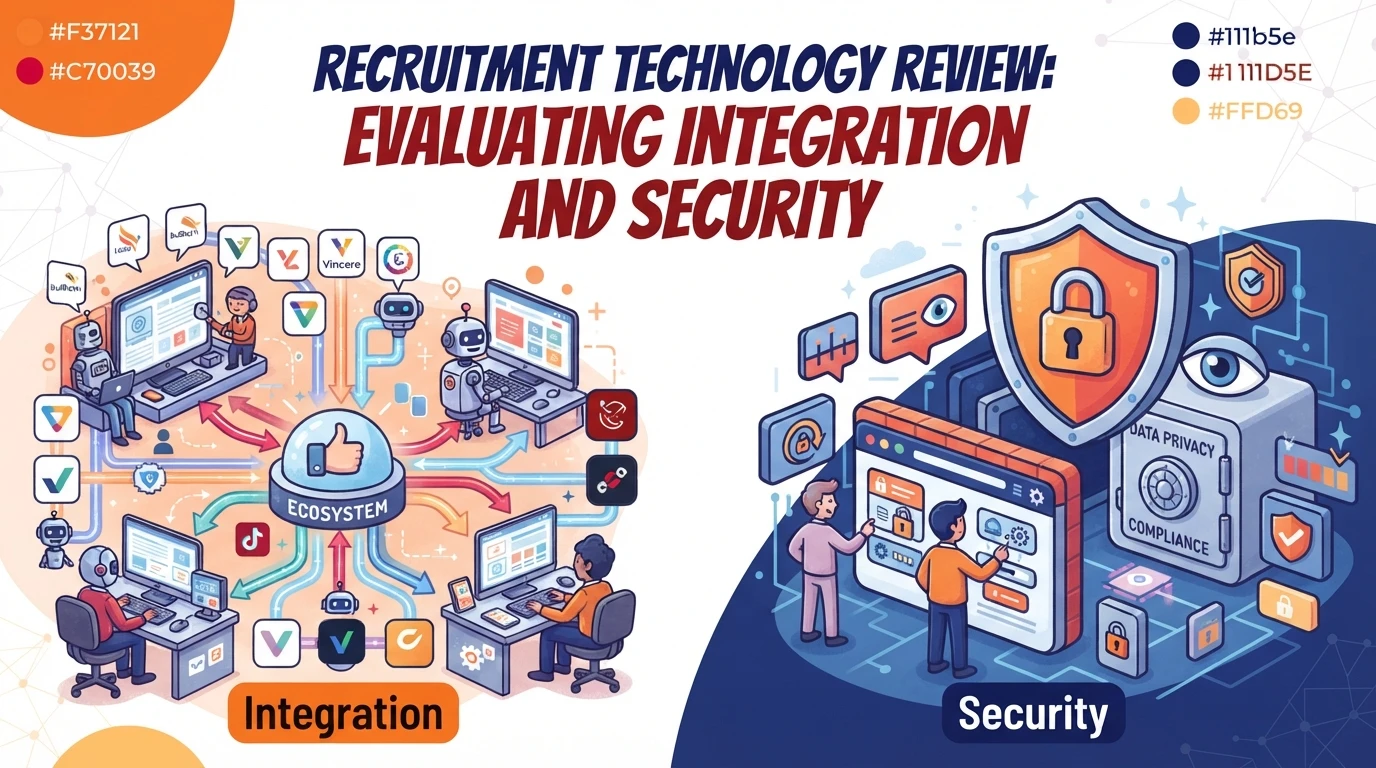
A five-consultant agency can easily lose hours every week copying CV data, chasing status updates and searching a CRM database that nobody trusts. Adding more software to a broken workflow only creates extra logins and higher monthly bills.
A practical recruitment technology strategy starts with fixing the core workflow, cleaning existing records and choosing tools that directly support billings.
Start with agency workflows, not software categories
Start with the desk rather than a vendor shortlist. Map a live role from brief to placement, marking every delay, hand-off and manual entry point.
Ask consultants where they drop out of the primary system to use spreadsheets, personal inboxes or local documents. Look closely at where candidate, client and job records lose detail or degrade over time.
Distinguish between tasks that require recruitment judgement and routine operational steps:

- Identify where consultants waste time re-entering candidate details or formatting CVs manually.
- Locate unworked candidate records caused by poor search visibility or messy tagging across branches.
- Map client follow-ups to find where commercial leads stall in the pipeline.
Fixing these bottlenecks requires reliable data before applying automation. The Information Commissioner's Office expects agencies to maintain accurate personal records under UK GDPR data protection principles.
Define outcomes you can measure
Tie every technology change to a specific commercial target. Track baselines before changing systems or adding tools.
| Workflow target | Operational measure | Commercial target |
|---|---|---|
| Candidate shortlisting | Time from job brief to initial submission | Higher submission-to-interview ratio |
| Client engagement | Percentage of lapsed contacts reassigned or contacted | Increased business development calls logged |
| Data hygiene | Volume of duplicate or incomplete records identified | Improved candidate reuse from existing database |
Setting clear metrics ensures technology investments serve the commercial priorities of the business.
Fix the CRM foundation before adding vendor tools
In agency recruitment, the CRM is the central operational system. It handles candidate relationships, client pipelines, compliance and placement tracking.
A new system cannot fix inconsistent database entry or bad operational habits. Importing hundreds of thousands of uncleaned records across multiple branches simply creates a larger, more expensive operational issue.
Before reviewing new platforms or undertaking a CRM migration project, establish required data fields, record ownership rules and deduplication processes.
Data enrichment and workflow automation
Sourcing and enrichment tools help agencies verify contact details, detect candidate role changes and identify updated contact details for lapsed records. Specialist external platforms such as data intelligence service can enrich existing CRM records to surface unworked commercial opportunities.
Automation should support consultant activity by scheduling tasks, sending status updates and capturing activity logs automatically. Consultants must remain accountable for client outreach, candidate qualification and final shortlists.
Reporting across the stack should clarify three points:
- Which client channels generate profitable placements.
- Which consultant workflows convert leads into fees consistently.
- Whether data quality across the database is improving or degrading.
Deploy AI where it cuts friction, not human judgement
Focus on routine administrative tasks
Introduce AI tools first where they reduce manual work without introducing regulatory or commercial risk. Useful applications include drafting initial job copy, summarizing call recordings, standardising CRM notes and flagging candidate duplicate records.
Assign an operational lead for each trial workflow. Review outputs weekly to confirm accuracy and time saved.
Use AI scoring for prioritisation, not automated rejections
Treat candidate matching scores as suggestions to assist consultant review rather than automated decisions.
The ICO guidance on AI in recruitment highlights data protection requirements around fair processing, transparency and bias. Keep experienced consultants responsible for shortlist decisions, sample automated outputs regularly and record manual overrides.
Explore further insights on workflow design and tech evaluation on our recruitment technology blog.
Evaluate recruitment technology against live agency scenarios
Test real desk scenarios in software demonstrations
Avoid relying on standard vendor scripts during product demonstrations. Require suppliers to process a live, messy agency record through a full desk workflow from job intake to placement.
Evaluate how each system handles real operational conditions:
- Test duplicate record detection when importing candidates from job boards or social platforms.
- Check how easily consultants can search historical notes and update contact records.
- Review how activity data flows into management dashboards without manual reporting.
Phased delivery reduces risk and controls costs
A phased rollout protects agency capital and improves user adoption. A typical approach involves an initial audit phase to assess system performance and data health, followed by targeted enrichment and configuration.
Appoint an internal champion and select a representative team of consultants for pilot testing. Clean active candidate and client records first, establish clear operational standards and measure performance before rolling out changes across the business.
The practical decision for agency leaders
Technology choices should support consultant productivity, improve data accuracy and drive placement fee growth.
Audit your current workflow to identify manual entry tasks and database errors before signing new software contracts. Focus investment on fixing core CRM data, establishing operational standards and introducing targeted automation that helps consultants spend more time talking to candidates and clients.