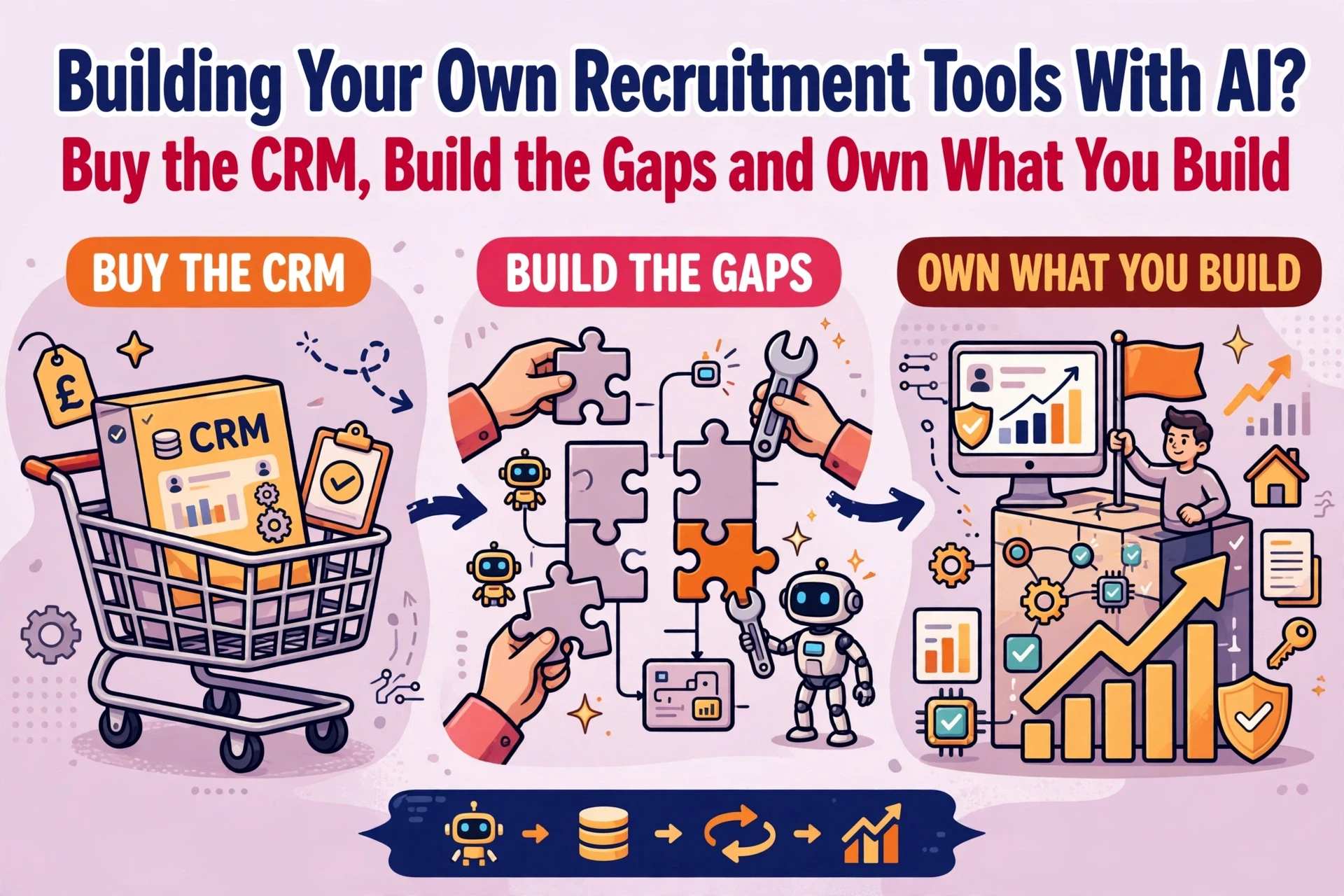
A single prompt in an AI application builder can produce a working database prototype in an afternoon. That tempts agency leaders facing software renewal bills to ask whether they can build their own CRM from scratch. Building an application prototype is fast, but running a recruitment agency requires a system of record. Replacing a commercial CRM with a custom build transfers compliance, infrastructure management and ongoing maintenance directly onto your own business.
What AI app builders can and cannot build
AI application platforms excel at creating front-end forms, custom candidate cards and basic search views. They allow an agency to prototype an internal tool in days to test a specific workflow idea.
Where these software tools fall short is handling the core responsibilities of an agency CRM. A true system of record must handle concurrent data updates from dozens of consultants simultaneously without record locking or data corruption. It requires granular access permissions, complete audit logs for compliance, and persistent connections to email providers and job platforms.
A working software prototype demonstrates design and workflow ideas effectively. It does not provide the underlying architecture required to run a commercial recruitment desk daily.
The ongoing operational burden of a custom CRM
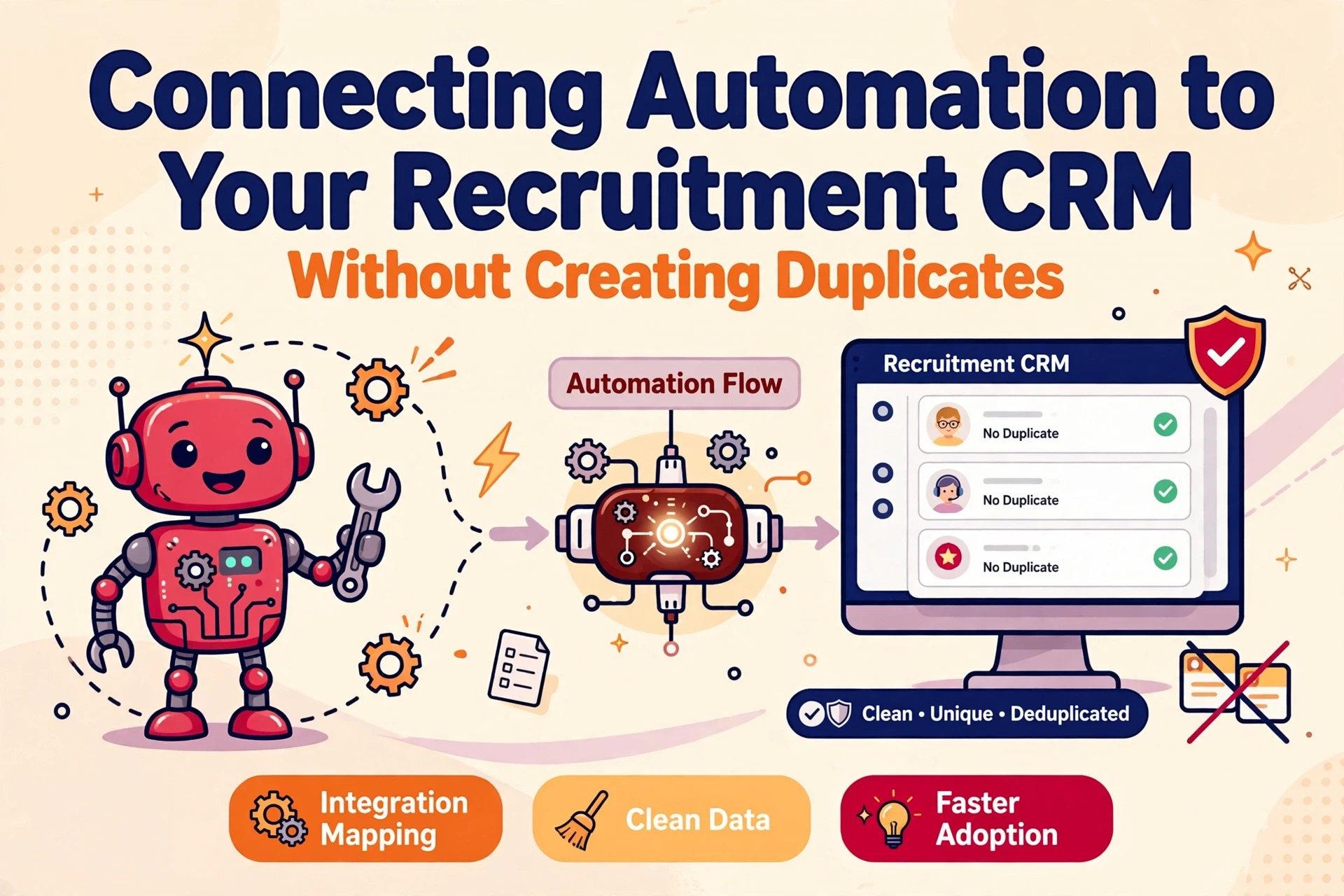
Commercial CRM providers deploy dedicated engineering teams to maintain software integrations whenever external APIs update. A custom build leaves your agency responsible for repairing broken data pipelines whenever a job board or email provider changes its technical specifications.
Security and data protection introduce further technical demands. Candidate data stored in a recruitment CRM carries strict legal obligations under UK GDPR, including subject access request handling, retention schedule enforcement and data access controls. A weekend prototype rarely includes the access infrastructure required for regulatory compliance.

When an internal build breaks during a busy placement run, internal team members must stop commercial fee-earning activity to fix code. Replacing an established commercial platform requires careful operational evaluation, as our guide to replacing your recruitment CRM explains.

High-value gap tools worth building around your CRM
Instead of replacing the core CRM, recruitment agencies achieve better returns by retaining their CRM as the system of record and building focused tools around it. Custom automation and internal software should address specific operational gaps that core systems handle poorly.
In our experience across more than 100 CRM implementations, agencies profit most from building targeted secondary software:
- Custom commission calculators aligned with complex fee structures.
- Business development pipeline trackers for multi-stage tenders.
- Resourcing dashboards that aggregate live operational data across specialist desks.
- Automated client reporting feeds pulled directly from CRM records.
Building focused tools preserves your core system of record while providing consultants with tailored workflows. If your agency is reviewing how to extend CRM capabilities, exploring our RecTech Consultancy service can help define where custom software makes financial sense. For broader guidance on technology architecture, read our guide on building custom recruitment tools with AI.
When building custom recruitment software makes sense
Building a proprietary CRM is rarely appropriate for standard recruitment agencies operating between 5 and 80 consultants. Commercial software vendors spread operational and maintenance costs across thousands of licensing clients.
Custom CRM builds are usually limited to specific operating models:
- Niche agencies running non-standard placement processes that standard CRM platforms cannot support.
- Recruitment groups managing multiple trading brands under a single central operational infrastructure.
- Larger businesses with dedicated in-house software engineering teams and allocated budgets for long-term product upkeep.
Without internal technical resources and ongoing funding, building a complete CRM creates unnecessary business risk.
Deciding your agency technology strategy
Before committing budget to custom software projects, audit where desk friction actually occurs. Administrative bottlenecks usually stem from poor workflow design or unoptimised CRM configuration rather than missing software features.
Start by identifying a single repetitive admin task outside your primary database. Build one targeted tool to resolve that specific task, maintain your licensed CRM as the central system of record, and measure user adoption before expanding your build scope.
Frequently asked questions
Can an agency build its own recruitment CRM using AI tools?
An agency can quickly assemble a functional database prototype using modern AI app builders. However, turning a prototype into a reliable system of record requires granular access permissions, full audit logging, multi-user concurrency and ongoing API maintenance. Generic AI app tools do not manage these core operational requirements automatically.
Why is replacing a commercial CRM with a custom build risky?
Replacing a commercial CRM makes your agency responsible for ongoing software maintenance, security updates and compliance obligations. When job board or email APIs change, your team must repair broken connections, shifting focus away from billing and fee generation. Commercial software vendors absorb those operational maintenance costs across thousands of agency client accounts.
What software tools should recruitment agencies build instead of a CRM?
Agencies should build targeted gap tools around their licensed CRM rather than replacing the core platform. High-return projects include custom commission calculators, business development pipeline tracking, desk resourcing views and client reporting tools that pull data directly from the primary CRM system.